Click an entry to read the longer explanation.
New
-
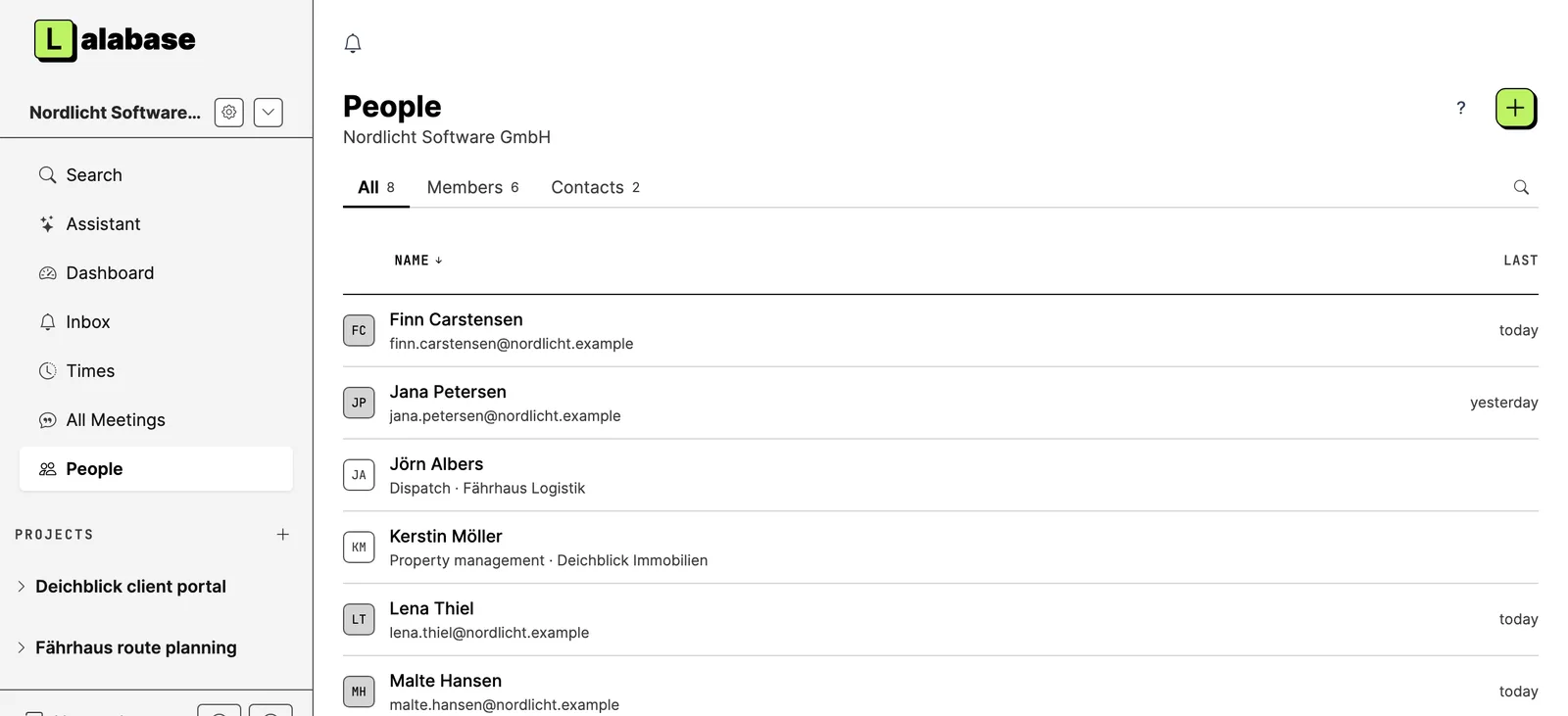
A people directory per organisation: members automatically, contacts by hand, last contact and meetings per person.
- Before:
- Contacts at the client were scattered over tickets, mails and notes. There was no place with all the people of an organisation and their details.
- After:
- Every organisation has a people directory. Members appear by themselves; contacts without a login you add by hand, with a salutation and up to ten details such as phone, website or address. You see each person's last contact and meetings. Who may see and keep the directory is set in the roles.
-
The assistant looks people up. The directory is also readable over the API and MCP.
- Before:
- The AI assistant knew nothing about the people of your organisation, and programs could not reach them.
- After:
- You ask the assistant for a contact's phone number, for example, and it searches the directory. Programs and external AI assistants read the directory over the API and MCP. The same rights apply as in the interface.
-
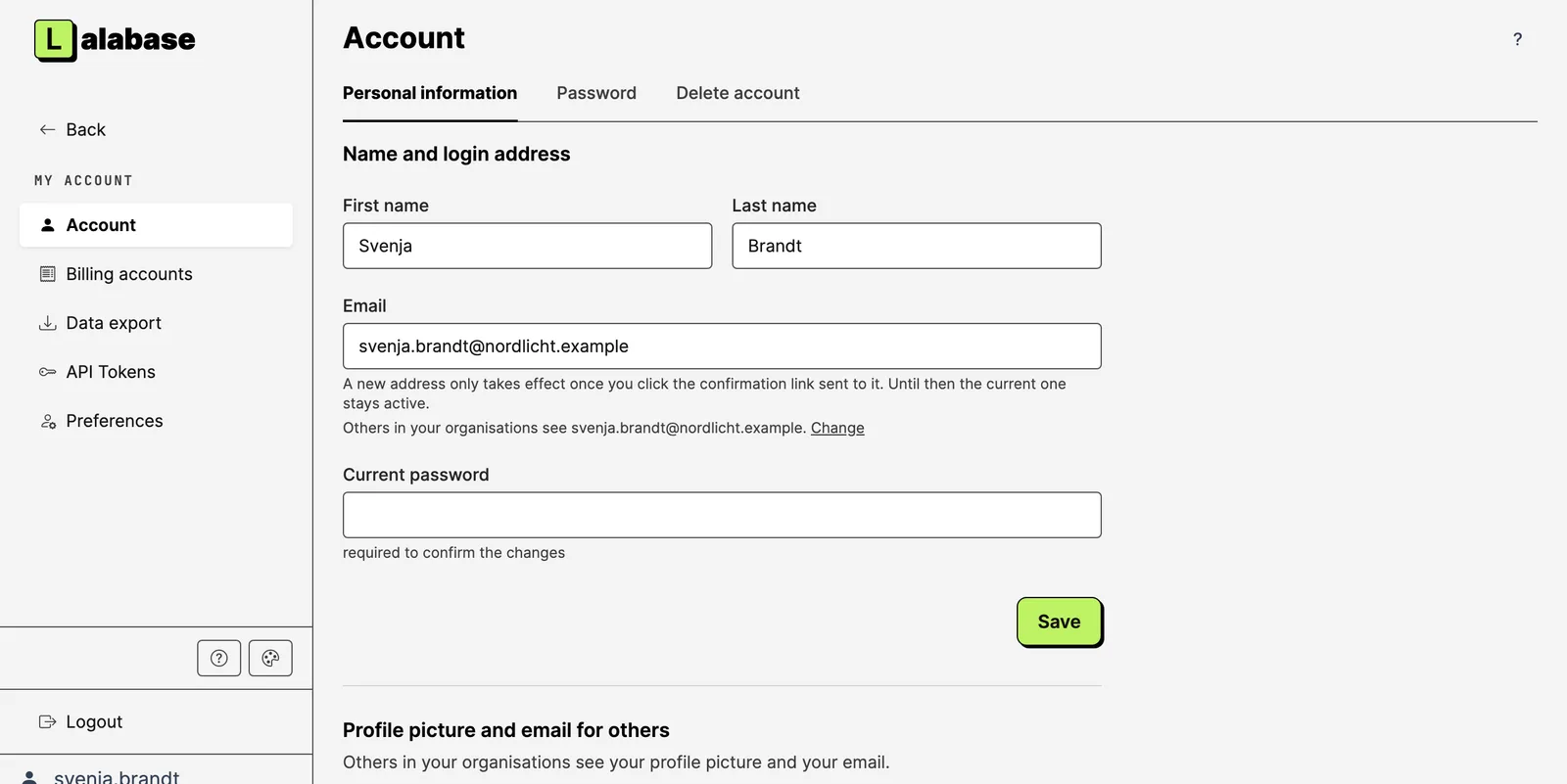
Each member chooses which email address others see.
- Before:
- Everybody saw the address you sign in with.
- After:
- Under "Profile" you choose what others see: your sign-in address, a separate contact address or none. The choice holds everywhere: on every page, in search, in the assistant and over the API.
-
Move a meeting, with its booked time, to another project.
- Before:
- A meeting in the wrong project stayed there, with the time booked on it.
- After:
- You move it to another project, and the booked time moves along, so the times stay right. A right of its own in the roles decides who may do this.
-
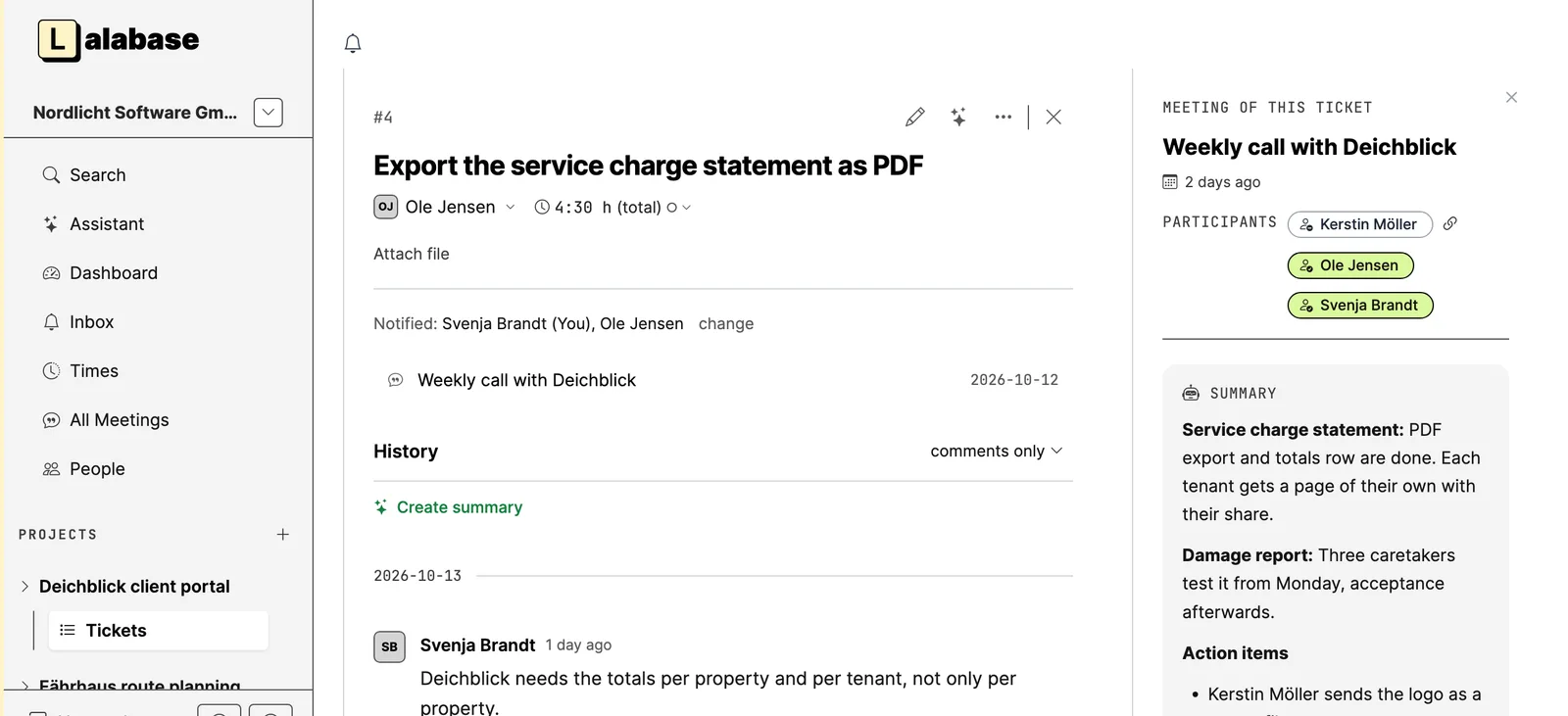
A linked meeting opens beside its ticket.
- Before:
- A meeting that belongs to a ticket could not be read beside the ticket.
- After:
- The meeting opens, read-only, beside the ticket. The AI assistant gets both as the basis for its answers.
-
Search hits show their date.
- Before:
- Search hits showed no date. Whether a result was current or old you saw only after opening it.
- After:
- Every hit shows its date, and its label appears in the language of your interface.
-
The MCP server has 19 tools. The API is ready for programs like the Lalabase CLI.
- Before:
- MCP, the interface for AI assistants like Claude, had 14 tools. An assistant had to be given the ids of organisations and projects from the address bar.
- After:
- It has 19 tools, among them listing your organisations and projects, time reports and the people directory. The API for programs has grown, with clear error codes and protection against duplicate entries. The Lalabase CLI, a tool for the terminal, is built on it.
-
Self-hosting A ready Docker image for every release.
- Before:
- Whoever runs Lalabase on their own server had to build it there on every update. That took time and could fail.
- After:
- Every release comes with a ready Docker image for Intel and ARM servers, started and checked before it is published. An update only downloads it.
Fixes & maintenance
-
AI answers no longer get cut short.
- Before:
- Some AI models, such as Gemini 2.5 and OpenAI's reasoning models, spent part of their answer limit on thinking. Answers and summaries stopped mid-sentence.
- After:
- Answers are complete. If a summary is cut off after all, Lalabase reports an error instead of showing it as a result.
-
Clearer names: "Account" for sign-in data, "Profile" for picture and display.
- Before:
- Two pages had similar names, and you had to guess which held what.
- After:
- "Account" is the page with name, sign-in address and password, "Profile" the page with picture, shown email address and how your name is written.
-
Several security improvements and updated dependencies.
- Before:
- Access tokens for the API and MCP sat in plain text in the cache while requests were counted. A ticket could show titles of meetings from projects you may not see.
- After:
- Both have stopped, and an email address a member hides stays hidden everywhere. On top come updated libraries with known security issues.
Technical details and upgrade notes for self-hosting are in the changelog of the source code. Changelog on GitHub